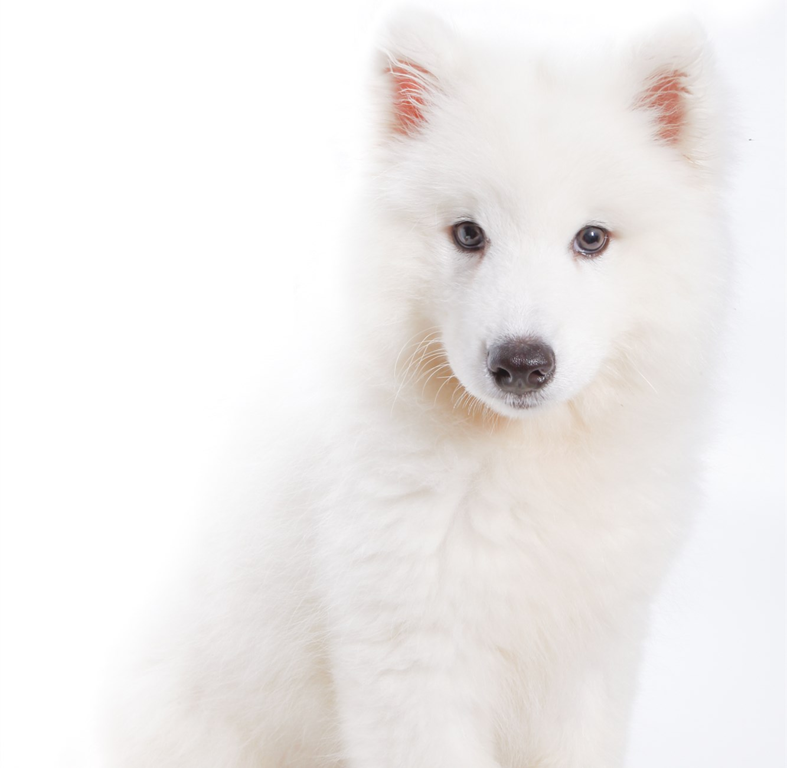
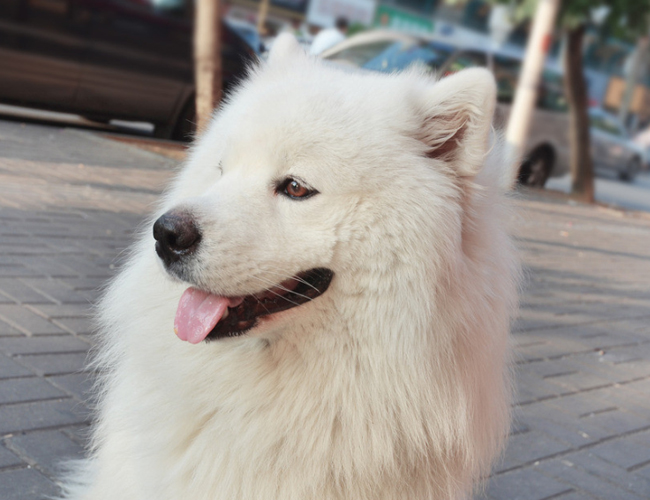
 The alert, powerful and lively Samoyed was originally a working dog. The coat of the Samoyed is thicker due to its previous growth in colder regions. The male Satsuma has a thicker “collar” than the female Satsuma, and the male has a masculine appearance without unnecessary aggression; the female has a delicate appearance or structure but not a weak temperament, and the female may have a slightly longer back than the male. And today more and more people are feeding the Samoyed as a companion dog.
The name Samoyed derives from the Samoyed tribe of northern Russia and Siberia. In the southern part of this region, the Samoyed tribesmen used white, black and brown, mixed-color dogs as reindeer handlers. In the northern part of the region, the dogs are pure white, docile, and are often used as hunting and sled dogs. Samoyed dogs live so close to their owners that they even sleep with them to keep each other warm. British zoologist Ernest Cleburne Scott spent three months in the Samoyed tribe in 1889. When he returned to England, he brought back a brown male puppy called “Sabaka”. Later he brought in a cream-colored female named White-Boyola from the western Ural Mountains and a snow-white male named Musty from Siberia. These few dogs and those brought back by the explorers are the foundation of the Western Samoyed.
Today, the Samoyed is a great companion for humans.
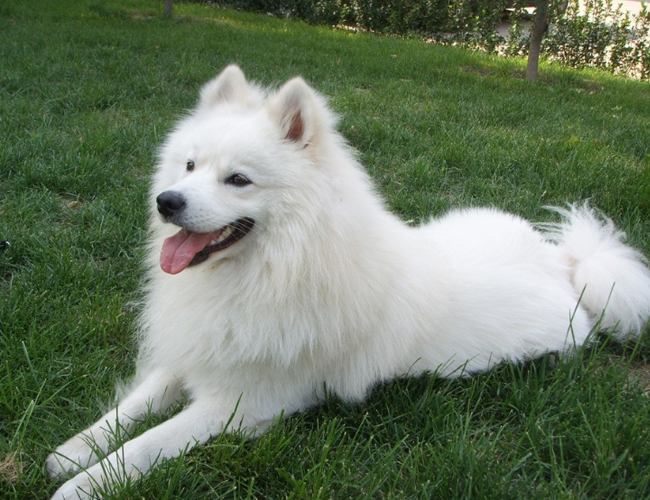
- Samoyed morphological characteristics
The Samoyed has the appearance of a medium-sized, elegant white Arctic silky-haired dog. It is not too big, but not too small, and has a very pleasing physique, giving it a powerful feeling. The pure white coat is one of the reasons why many people prefer it, and the characteristic “Samoyed smile” is a combination of eye contour and posture, as well as a slight bend to the top corner of the mouth. Its hunting ability is very weak, not a little bold but bad fight, generally prefer to live in groups.
1. Body proportions: The length of the body is about 5% over the height of the shoulder. The depth of the body is slightly less than half of the shoulder height, and the muzzle is about as long as the skull.
2. Head: wedge-shaped
3. Eyes: The two eyes are well separated and almond-shaped, with dark brown eyes. The eye circle is black, but some Satsuma eyes are not black
4. Nose: black is preferred, but at certain times of the year, the pigmentation of the nose will fade
5. Ears: erect (may droop when young, but will slowly rise as they grow), small, thick, triangular, and high
6. hips: full, strong, muscular
7. waist: short, strong, relatively clear outline
8. Chest: wide and deep and long, almost to the elbow
9. Back: medium-length, muscular and straight; females have a slightly longer back than males
10. Tail: high position, when the dog is alert and in motion, the tail bends forward from the root to the back or ribs, but at rest the tail hangs down and extends to the hind legs.
The Satsuma’s coat is extremely rich and pliable. There are two layers consisting of lower and outer layers, and the tail should be covered by abundant hair. The epidermal texture of males is generally shorter than that of males, but softer.
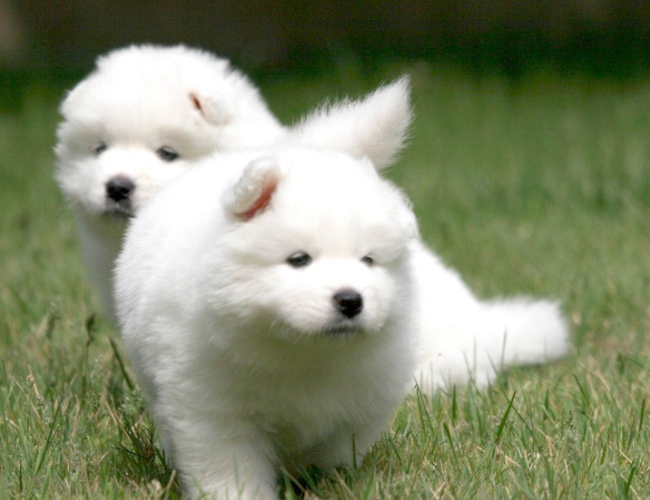
- Samoyed personality characteristics
Some owners feel that the Samoyed always likes to run around, move well and is more mischievous. That’s because the Samoyed is a running animal. He likes and needs to exercise to keep his body healthy, which is his nature. Some owners keep their satsuma in the house and don’t let him go out and about, which is not right. If you keep your satsuma in the house or in a certain area for a long time, it will cause some harm to the satsuma itself.
Satsuma is intelligent, elegant, loyal and very adaptable. It is its gentle and friendly nature that makes it one of the reasons why many people choose it. The Satsuma is also alert in its activity, friendly but conservative, and it is very eager to serve.
Because the Satsuma is more active, it is not easy to concentrate when training, so use some stimulation method to attract its attention, such as pulling with a leash, or lure it with food, with the right method plus its own intelligence, it will surely get twice the result with half the effort.

- Samoyed dog care knowledge
Because Satsuma’s hair is thick, it becomes a problem for him in the summer. The owner can bring it to the beauty store to properly remove the hair, for this size is still a large dog, the sole of the foot hair and ear hair can not often clean, because compared to Teddy such a dense ear hair of small dogs, Satsuma’s ear hair can be negligible, but can not be a couple of months without cleaning, it is best to clean up about 7 to 15 once.
Pay attention to trimming its hair in summer, but pay attention in winter. Many pets have skin diseases that are caused by bathing without blowing dry, or bathing too often.
Although the nails of medium and large dogs do not need to be cleaned as often as small dogs, because the usual walk in the nails will be smoothed out by itself, but the appropriate treatment still needs to be, or the blood line will be followed by long, so no matter what the dog, it is best to cut the blood line in the hours.
Common diseases of Satsuma include demodicosis, diabetes, allergic dermatitis, cataracts, glaucoma, acute glomerulonephritis, etc. Because of genetic relationship some young Satsuma may be congenitally underdeveloped hip joint. Therefore, it is important to pay more attention to the diet of Satsuma for various diseases.
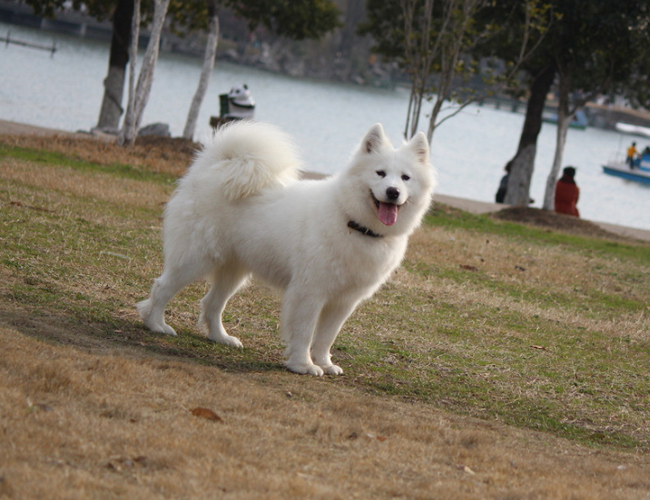
- Samoyed Feeding Essentials
Feeding satsuma should not eat too sweet food, because diabetes is very common in satsuma, the demand for exercise, so that the proportion of meat in the dog food given to satsuma to take up relatively more. The skin resistance of Satsuma is not particularly good, and demodicosis and allergic dermatitis are also common diseases. The owner can add some vitamin tablets to increase the skin resistance to improve its skin when feeding the dog food.
Usually you can also feed it a little calcium powder to strengthen its bones, which can give it better athletic ability. If you want to change a dog food for your dog do not change all the previous ones at once, because he will not be used to it, a hasty change may cause a stress reaction, you can slowly change some new dog food in the original dog food, and then the amount increases in turn, until it does not reject all the dog food will be changed.
If the dog usually do not pay attention to their diet, the owner can slowly train it, you can do some petting action and then feed it to eat dog food, let it feel that this is a reward for him, over time it will slowly take the initiative to eat dog food, stimulation method is often the best way to train dogs.