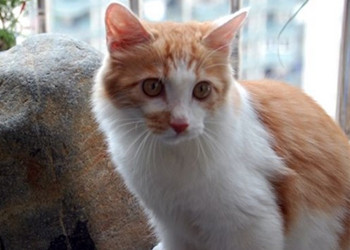
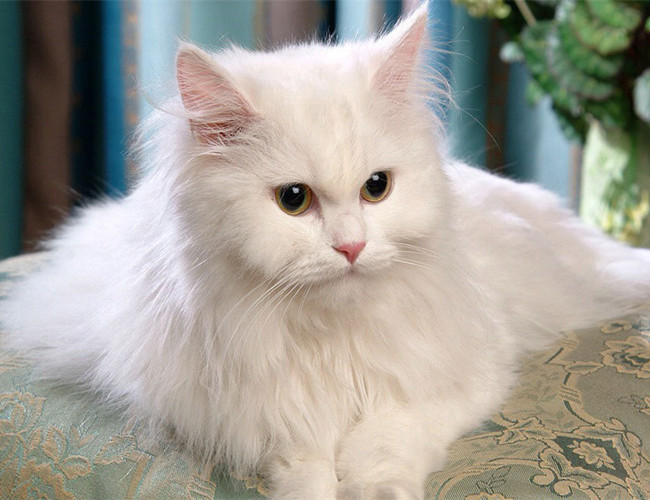
 Turkish Angora cats are not only white, but also other colors. Many people also call their white mandarin-eyed cats Persian cats, which shows that many cat owners do not know much about cats, and many people say that theirs is the so-called “Norwegian Forest”, but in fact, more than 95% of them are just ordinary domestic cats.
The Turkish Angora cat is named after its birthplace in Angola, the capital of Turkey. Its origin is from the 16th century, and it is the oldest cat breed among the long-haired breeds. Since its introduction to Europe, its noble appearance has been very popular and has become a valuable breed. It was not introduced to the United States until 1963. After the 1970s, it appeared in cat shows and became popular throughout the United States. At present, even the Angolan Zoo in Turkey, where the Angolan cat originated from, is breeding under strict control in order to preserve the pure bloodline of this cat. The silky, shiny and tactile coat is neither too long nor too short, and the tail is even softer and fluffier. The Angolan cat was first arrived in the United States in 1963 and has made a comeback, reappearing at cat shows and gaining popularity again. The Angora cat is one of the oldest breeds, originating in Turkey, and was introduced to Europe in the 16th century, mainly in France and England, where it was the most popular long-haired breed. By the middle of the 19th century, due to the emergence of the Persian cat; the status of the Angolan cat gradually decreased. At present, Angora cats are mainly distributed in Turkey, and their numbers are few elsewhere.
- Turkish Angora Cat Morphological Characteristics
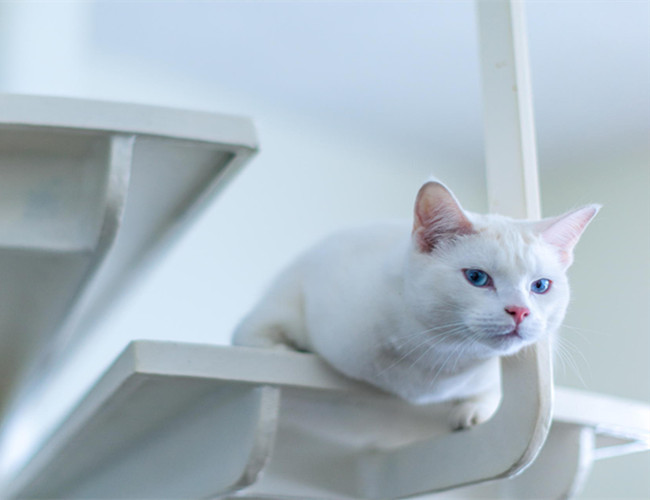
The Angora cat has a very long body with very large undulations that appear on its back. The Angora cat has very thin limbs and is very tall. Its head is pointed and looks somewhat long. There are large ears located on its head. Its whole body is covered with long, silky hair in the colors of brown, red, black, and white, and generally, it is considered that the purest color of the Angora cat is white.
Body shape: Angora cats have a long and slender body with a large undulating back.
Head: Long and wedge-shaped
Ears: Large and pointed
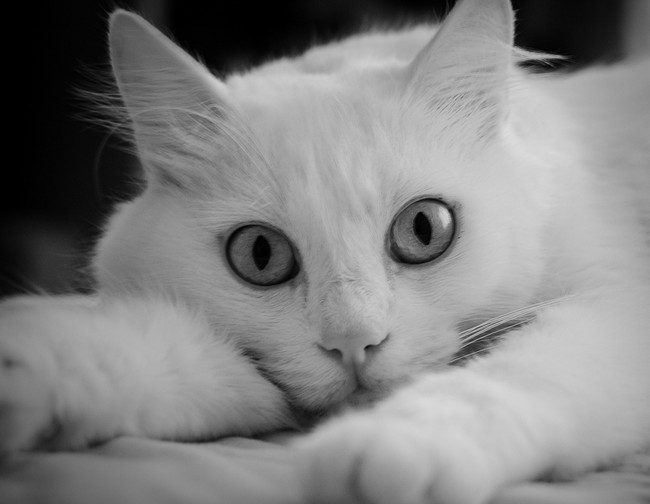
Eyes: Medium sized, dangling almond eyes, orange, blue, green or mandarin
Mouth: pointed
Limbs: long and slender, with the front limbs slightly shorter than the hind limbs
Feet: small, rounded claws
Tail: Long tail
Coat: shiny, slender, medium length
Coat color: In addition to the traditional white, there are black, blue, silvery gray, brown, red, bicolor, and mottled colors.
- Turkish Angora cat personality characteristics
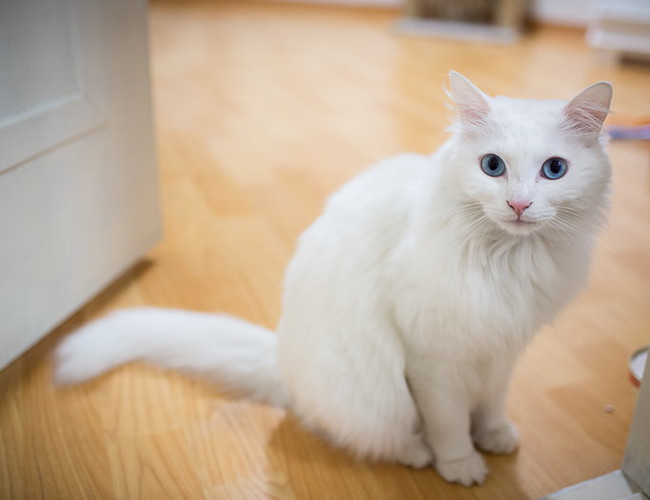
At present, in order to preserve the pure bloodline of this Turkish Angora cat, even the Angolan zoo in Turkey, where it originated, is breeding under strict management. The Turkish Angora cat has a silky and shiny body coat that is neither too long nor too short, and the tail coat is even softer and fluffier. With beautiful almond-shaped eyes, the Turkish Angora is a cat that can be best described as “elegant”.
The Turkish Angora cat is agile and independent, and does not like to be petted or held. The Turkish Angora is quiet, intelligent, and close to people, and is dedicated to loving its owner. The most amusing thing about this cat is that it likes water and can swim in streams or baths with a good attitude. Turkish Angora cats are very clean, as they often lick their fur. Their saliva is like a strong cleaning agent, but it can cause allergies in humans. Due to the accumulation of hair in the stomach after swallowing it while licking, sometimes Turkish Angora cats may vomit out hair balls. Turkish Angora cats sleep longer than other animals in order to replenish their energy. The daily sleep time is 12 to 16 hours, with an average of 13 to 14 hours, but some Turkish Angora cats will sleep up to 20 hours.
- Turkish Angora cat care knowledge
Turkish Angora cats are very clean, for example, they often lick their fur. The saliva of Turkish Angora cats is like a strong cleaning agent, but this saliva can make some humans allergic, so you should be careful if you are allergic. Turkish Angora cats may sometimes spit out hair balls because of the accumulation of hair in their stomachs after swallowing it while licking the fur. Especially during the hair loss period, owners should check more carefully.
It is a habit of the cat to sharpen its claws, so it is impossible to make it stop. For a small cat, its claws are its most powerful weapon, so it must be sharpened from time to time by sharpening the aging cuticles. In addition, claw sharpening is also a way to show off its power and increase its scent. The cat has odor glands inside its front feet, so it sharpened its claws to make its feet smell like itself. Nevertheless, if you let it sharpen its claws, the sofa, curtains, chairs, carpets, wooden floors, walls, etc. at home will become tattered and terrible. Once the cat has decided where to sharpen its claws, it will go there again and again, and the damage will be even worse. Teaching cats to sharpen their claws is one of the most difficult things to do. Therefore, it is important to start this education early before the furniture is trampled.
First, prepare a special claw sharpening tool. Although there are many kinds available in the market, it is also good to make your own. Just wrap a strip of cloth around the board. If possible, prepare a few extra pieces and place them in places where the cat likes to go. If the cat starts to sharpen its claws on the furniture, say “no” immediately and take it to a place with a special board. The owner can grab its front feet and make it sharpen its claws. At first, the cat may make a fuss, but after a few sessions it will sharpen its claws patiently. When he can sharpen his claws very skillfully, then he should be praised. This way, the cat will naturally remember where to sharpen its paws, but if you can’t wait, you can spray the floor where you don’t want it to sharpen its paws with odorant or sprinkle it with vinegar, which cats hate. However, once the smell is eliminated the effect is gone, so it can be said that patient education is still the most important.
- Turkish Angora cat feeding requirements
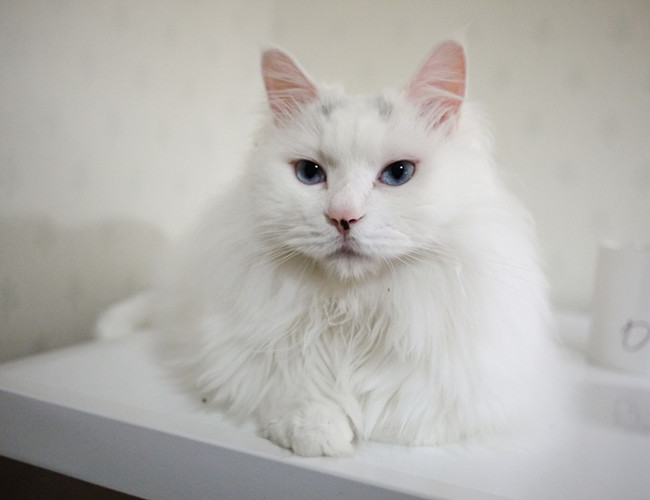
The Turkish Angora cat has a more rounded and shorter head than the Angora cat, and in terms of overall appearance, it resembles the Oriental cat at all. The Turkish Angora cat has ears that do not protrude too much. The cat with white fur has eyes of different colors, and if the eyes are blue in color, it is likely to have deafness. So owners who keep them should be careful.
Cats enter human life later compared to dogs. Cats are mavericks and we inevitably have some misconceptions about their lifestyle or personality preferences. Let’s start with eating.
The status of pets in people’s hearts is gradually rising, but overindulgence or lack of understanding of the diet structure of cats leads many people to think: what they eat to give the cat what to eat, so that they can be called good owners. But are cats really fit to eat our food? The answer is no. It is not a good idea to give the human food to the cat directly as a meal, or to take out some of it as a snack, which will cause two kinds of problems for the cat’s body. Cats need different nutrition than humans, and need to use protein to convert energy, while people are using fat to convert energy, so cats need much higher protein than people, and the amount of vitamins and minerals needed and people are different. Cats eat human food for a long time will cause malnutrition, unbalanced nutrition can not be considered a healthy cat cat yo!
Older people like to make bone broth to supplement calcium for their families, and some parents follow suit and use bones to supplement calcium for their cats. No matter what animal bones, should not be given to the cat to eat, that not only will not play the role of grinding calcium, but will hurt the cat’s stomach and intestines, causing indigestion. Milk, milk is not the same as water. It sounds like nonsense, but this is indeed an important point (especially for kittens). Kittens may not grow up being fed by their own mothers for various reasons, which requires surrogate mothers to be careful with their choice of milk. For us, the best thing to get is milk, but strictly speaking, milk is not suitable for cats. The lactose content in milk greatly exceeds the lactose content in cat milk, and the cat’s intestines often get diarrhea because they can’t absorb the milk, which is why it is said that cats get diarrhea from drinking milk. So our view on milk is – don’t give milk as water to cats.